
 Italiano
 English
Published ·
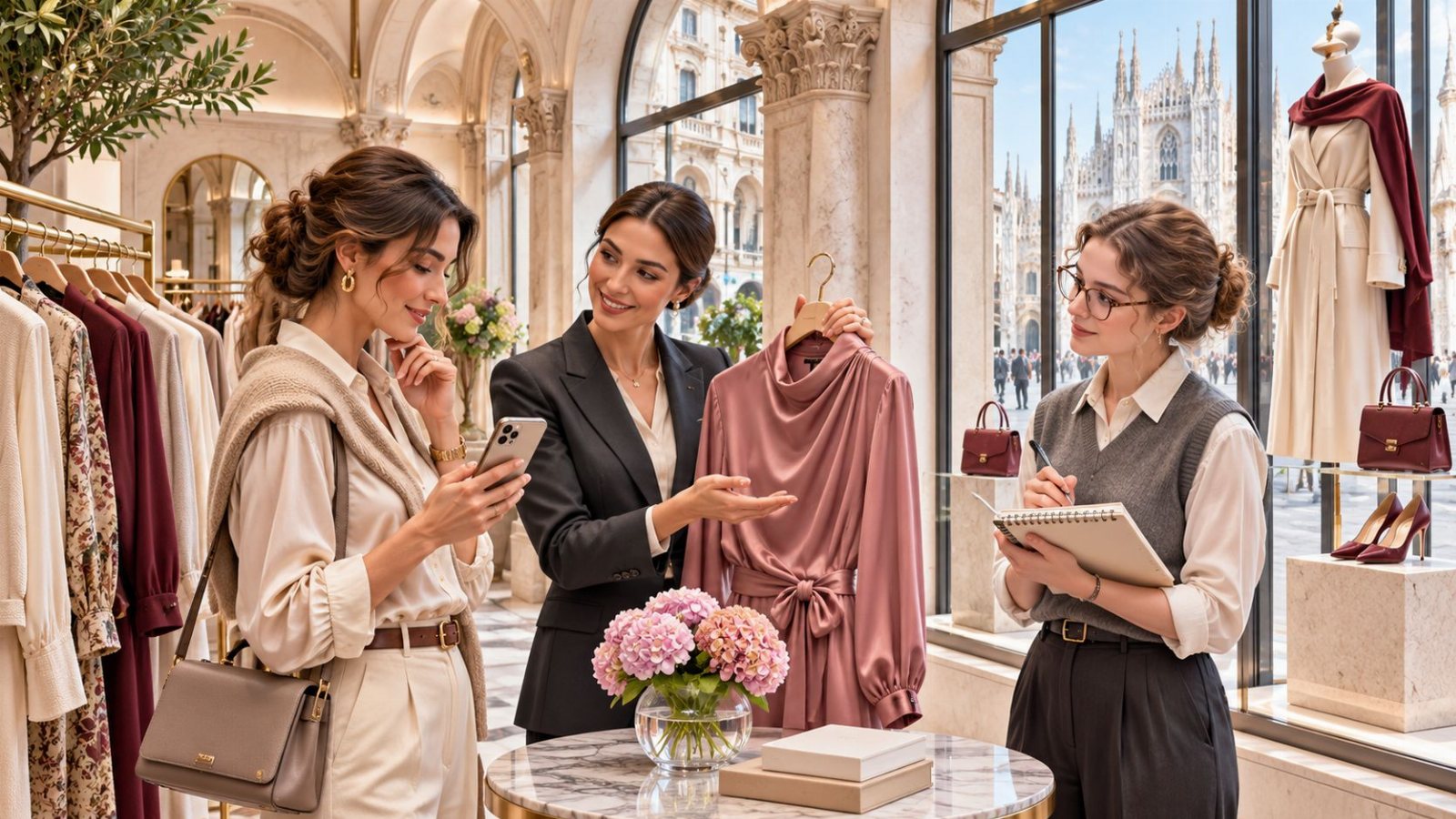
A customer walks in with their phone in hand. They ask the sales assistant whether that coat is worth the price on the screen, and the assistant has three seconds to answer. They can show the stitching and close the sale. They can say it costs less online and lose the customer. They might not know.
These moments are the raw material of any fashion retail training in Milan. A good programme doesn't start from theory: it puts you in front of the shelf and makes you watch how staff greet people, where the price tag sits, how long the wait lasts before someone comes over.
The seven formats below do different things. Some take people inside stores, others work on the skills of the people who work there, others sell a service to the end customer. The limit to keep in mind is simple: a visit doesn't replace a skills programme, and a course doesn't replace observation. Anyone who confuses the two buys an afternoon and thinks they have bought a method.
Contents
- Fashion retail in Milan: the difference between looking and understanding
- 1. Milano Retail Tour (MiRT)
- 2. Retail Institute Italy – Retail Tour
- 3. Fashion Retail Academy – FederModa Milano
- 4. Milano Fashion Institute – Executive Course in Fashion, Retail and Operation Management
- 5. IED Milano – Visual Merchandiser Continuing Education Course
- 6. Personal Shopping Milano – Business services
- 7. Milano Fashion Tour
- Formats compared
- Three questions before choosing a format
Fashion retail in Milan: the difference between looking and understanding
Walking down Via Montenapoleone is not a method. A format becomes educational when it tells you what to note down, with which framework and what it is for afterwards. Below you'll find what each one offers and, above all, what it doesn't, because the second part is the one people usually discover too late.
1. Milano Retail Tour (MiRT)
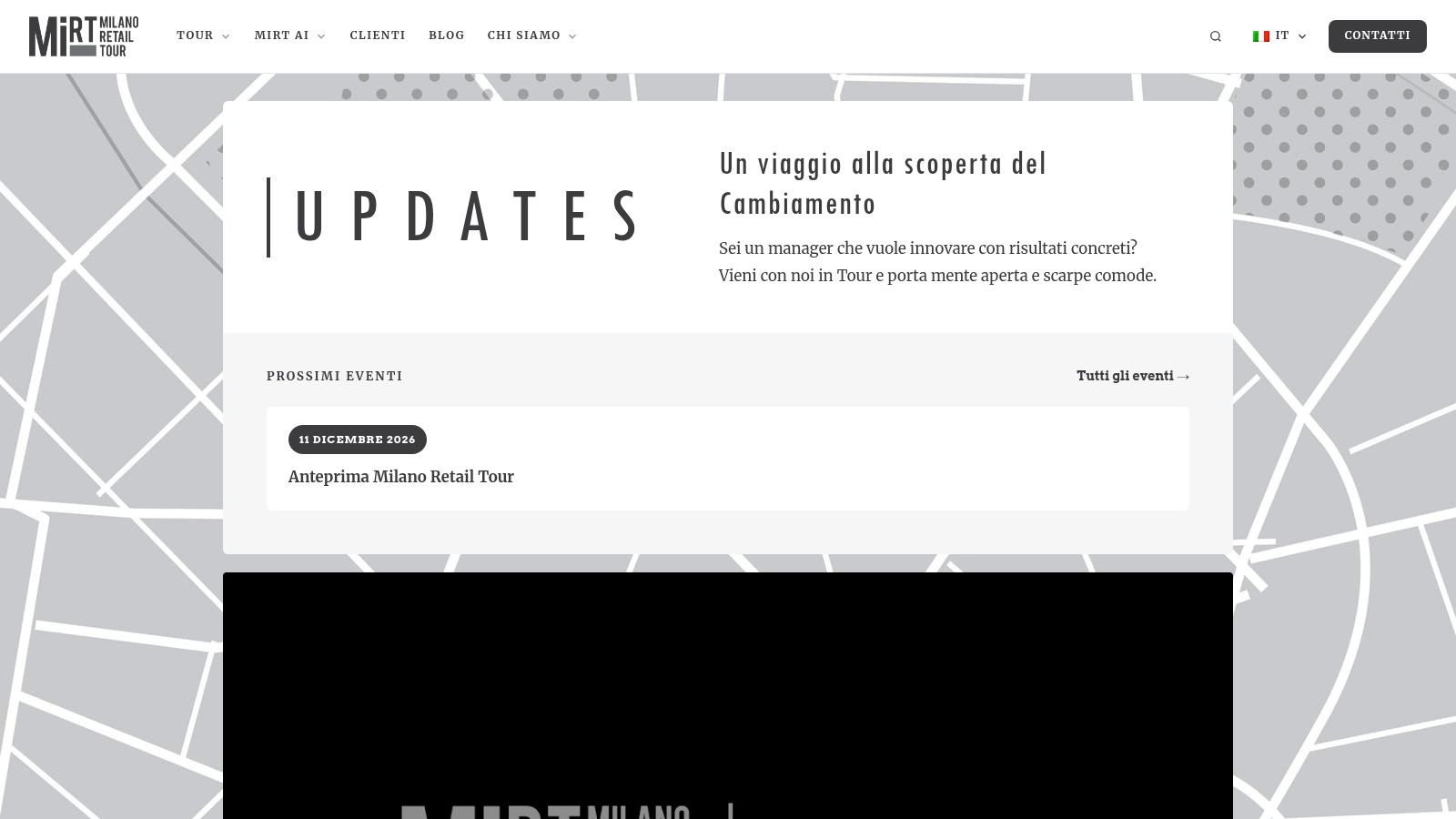
This is the format built entirely on guided observation. You walk through selected stores in small groups, accompanied by a MiRT researcher, and look at the welcome, the presentation of the brand and the sales ritual. Then you go back to the classroom, and what you have seen becomes working material for your own store.
What you take home
The difference from a stroll lies in the observation guide. A Politecnico di Milano study of 13 Italian retailers, across fashion, bookshops and consumer electronics, describes omnichannel as the integration of channels, processes and organisational responsibilities (Politecnico di Milano). In front of the shelf, the questions to ask are about exactly that integration: is the stock accurate, can a missing product be ordered, can returns be handled in store.
What to look at first: whether staff can order a missing product at the till, and how long the confirmation takes to arrive.
Who goes with you: one MiRT researcher per group, with the ethnographer's kit handed out at the start of the programme.
What happens afterwards: a closing workshop in which what was observed in the field becomes ideas to apply to your own store.
The advantage comes from the people in the store who know how to answer when the customer holds up the screen.
For an owner, it is a way to compare their store with the most innovative ones in the city. For a team, it is a way to step outside their own banner and look at others' with a framework. Programmes last half a day or a full day, with visits to 10-12 stores in the short format, and run in Italian or English. Corporate programmes are built around the client's objectives and also work as a training module, team building or a session within a convention. Quotes vary by duration, format and number of participants. The 2026 Preview took place on 12 November; the next date is 11 December. Information at Milano Retail Tour.
2. Retail Institute Italy – Retail Tour
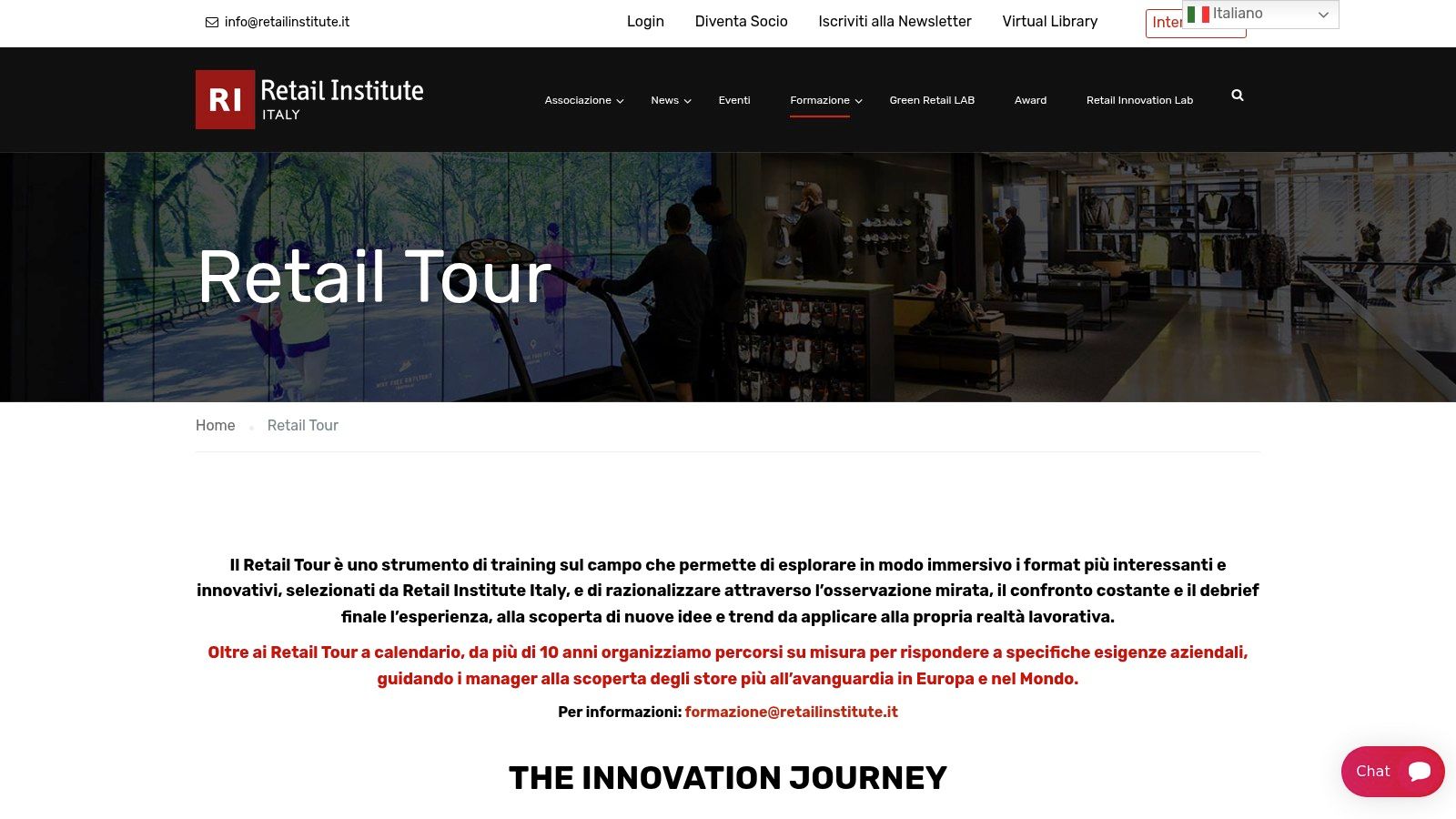
The institute's tour follows a stated theme. You enter selected formats with a guide, compare layouts, concepts and service solutions, and finish with a discussion among participants.
One theme at a time
The Milan calendar revolves around store design, new concepts and recent openings. Participants see how the city is changing without having to build an itinerary from scratch, and hear what the other professionals in the group have noticed.
A filter is needed because the number of stores worth looking at has shrunk. In 2024 the balance between openings and closures in Italian fashion retail was negative by 6,459 stores; over the last five years an average of 13 stores a day have been lost, and in 2024 the loss was 18 stores a day (Federazione Moda Italia-Confcommercio). Fewer shop windows open also means fewer opportunities for comparison: selection matters more than it did five years ago.
Format: themed tours of selected stores and concepts.
Method: guided observation and professional discussion.
Recurring themes: retail design, new concepts, store innovation.
Its strength is the light organisational load: a tour already on the calendar takes less work than a private project. Its limit is customisation. A theme chosen by the organiser may not match your problem, and dates and programmes need to be checked before you plan travel and cover in the store. Prices and conditions are not shown consistently on the page. Calendar and contacts at Retail Institute Italy.
3. Fashion Retail Academy – FederModa Milano
No walking here. Someone from the team sits down and works on what happens between sales assistant and customer: welcome, objections, fitting room, closing the sale.
Skills before places
The offer is broad: customer management, communication, teamwork, store management, visual merchandising and shopping experience, trends and colour, store storytelling and fashion e-commerce. Training is delivered with Formaterziario, and the page mentions the possibility of funding through the For.Te fund (an Italian inter-professional fund for continuing training).
Why start with people: in 2024 fashion sales in Italy fell by 4.2% compared with 2023, according to Federazione Moda Italia's Fashion Report 2025 (Federazione Moda Italia). With lower overall revenue, the range alone won't hold up. What holds up is staff who can raise the receipt value on what is already in the store.
Who it is for: a sales team that needs to update its skills in customer relations and store management.
What it doesn't do: it doesn't produce a comparison between stores. You don't see how the shop next door works.
To check: access and whether it is free depend on the company, the course and the funding conditions.
Rule of thumb: before enrolling six people, ask the provider which measurable behaviour the course works on. If the answer is vague, you'll only judge the return by gut feeling.
Dates and editions change and should be confirmed before enrolling. Programmes at FederModa Milano Academy.
4. Milano Fashion Institute – Executive Course in Fashion, Retail and Operation Management
This is the longest programme on the list: 66 hours over six weekends, according to the course page, in Italian and English, based in Milan with a live-streaming option. It is not a visit. It is an executive course in fashion management, retail and operations.
Where the problem sits
The relationship between the physical store and the digital channel is part of the programme, and the order of priorities matters. An applied case on an Italian clothing retailer, published in the Politecnico di Milano repository, identifies Click and Collect and Buy Online, Return In Store as the most desirable omnichannel solutions, together with improved outbound management and stock efficiency in stores (Politecnico di Milano). The technical point is that the store becomes a logistics and service hub: stock that is visible and bookable, staff who can complete a digital order, pick-up preparation times, returns that create a second opportunity.
KPIs to bring to class: inventory accuracy by SKU, order-to-pick-up time, share of pick-ups completed within the promised window, returns converted into an exchange or new purchase, cost per fulfilment.
Limit of the case: it doesn't publish before-and-after figures on turnover or conversion.
Question to ask the lecturer: how to measure cost per fulfilment within your own scope, using data you already have.
Without reliable warehouse processes, in-store pick-up increases friction instead of reducing it.
The course takes time: six weekends away from the store. Choose it when the problem is one of method, not of the shop window. The page describes the September-December 2026 edition, so editions and enrolment need to be checked. Details at Milano Fashion Institute. To understand which skill a store manager is really missing, our overview of what a retail manager in Milan needs to be able to do is a good starting point.
5. IED Milano – Visual Merchandiser Continuing Education Course
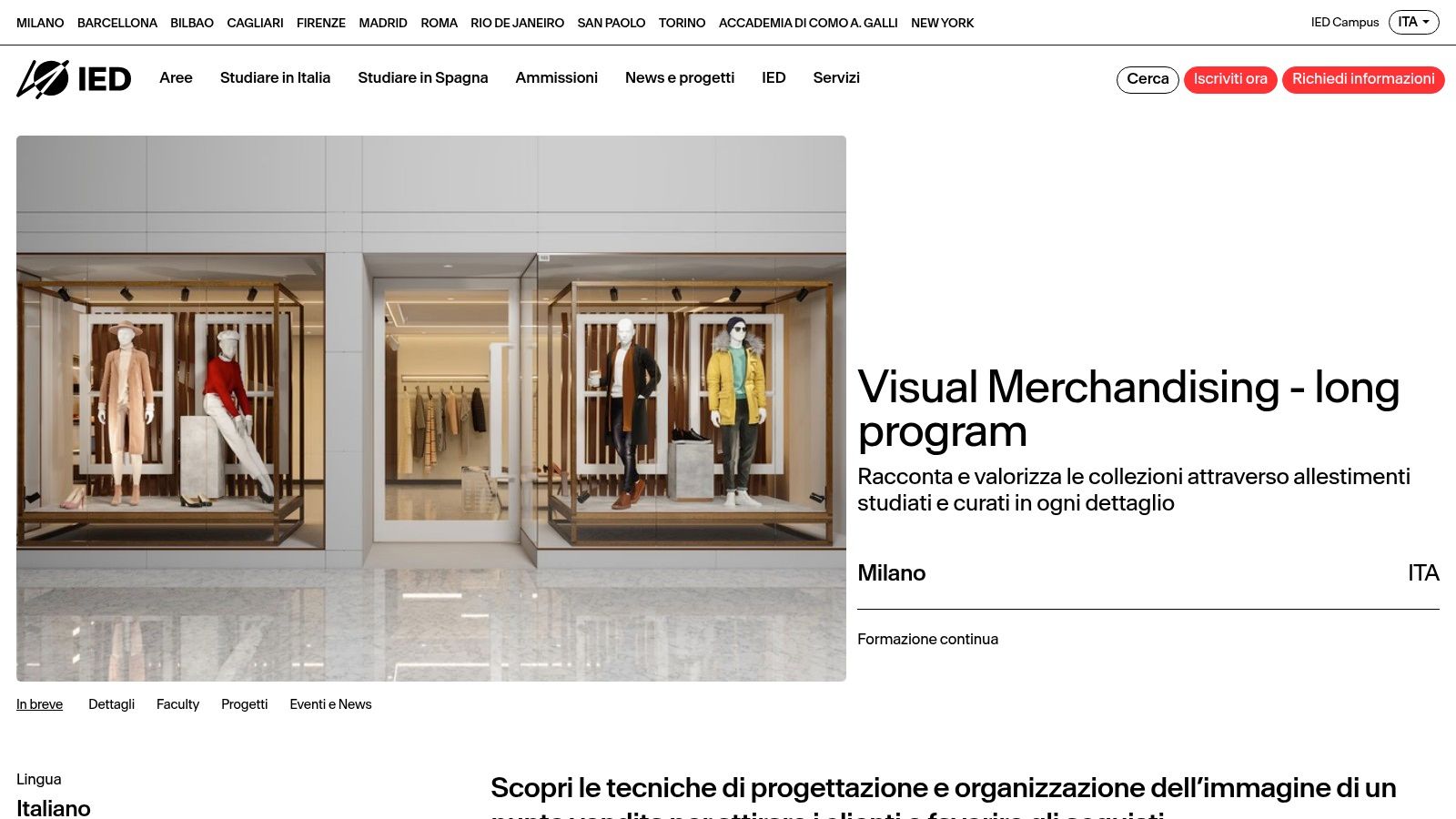
A customer walks in, looks at the first table, turns right and leaves. Whoever set up the store wrote that route. This course works on that skill: layout, display, merchandising, visual culture, trend forecasting and project workshops.
Fashion retail in Milan: where the visual merchandiser's work shows
The stated programme includes fashion retailing and a retail tool project, as well as a book on visual merchandising. The content applies to fashion and to related categories such as accessories, eyewear and cosmetics, where product presentation weighs on a substantial share of sales.
The reason to invest in it is the weight of the physical store. Four out of every five euros that Italians spend on clothing, footwear and accessories still go through the store, while online purchases remain a minority share of the sector (Il Sole 24 Ore). If most purchases are decided in front of the shelf, the display is where that decision is played out.
Strengths: specialisation in one specific function, project-based work, relevance for visual and retail marketing roles.
Limit: it doesn't cover selling, operations or comparison between banners.
To confirm with IED: price, calendar and current edition.
A mannequin moved one metre changes the customer's route. The course helps you understand why that move works.
The format rewards one or two people who then bring the method back to the store, more than a group outing with the whole team. For an owner or visual manager who needs to redo layout and windows it covers the right skill; to see how other banners solve the same problems you need a format that physically goes into the stores. Programme at IED Milano.
6. Personal Shopping Milano – Business services
This provider doesn't teach you to observe: it brings skills into the store. Training and workshops for companies and retail professionals, in-store events with personal shoppers, styling and image consulting, communication activities in the fashion and lifestyle world.
Who really needs it
It is useful when the problem is service at a specific moment: an evening event, a launch, a clientele that asks for one-to-one assistance. The in-store event becomes the test of a hypothesis, not just a party.
The numbers help you choose whom to invest in. During Milan Fashion Week 2025, affluent customers were 27% of international visitors but generated 43% of tax-free spending, with an average spend of €2,600; ultra-high-net-worth individuals were 7% of shoppers and produced 36% of spending, with an average of €9,000; aspirational shoppers were 66% of visitors and 21% of spending, with an average of €530 (Global Blue). Three audiences, three levels of service. An identical event for all three wastes the top end and intimidates the bottom end.
What to ask the provider: objectives, audience, expected result and how it is measured.
What it isn't: a comparative tour of several stores. It doesn't produce a reading of the market.
What to agree before the budget: duration, availability and price, to be requested directly from the provider at the quotation stage.
The weak point: a personal shopper raises the value per visit, not footfall. If the problem is that too few people come in, that is a different job.
Before buying an event, it pays to know what the customers who have already come in are saying. The method is the voice of the customer gathered in the store: the opinions of people who have already experienced the store show you which experience to invest in. Services at Personal Shopping Milano.
7. Milano Fashion Tour
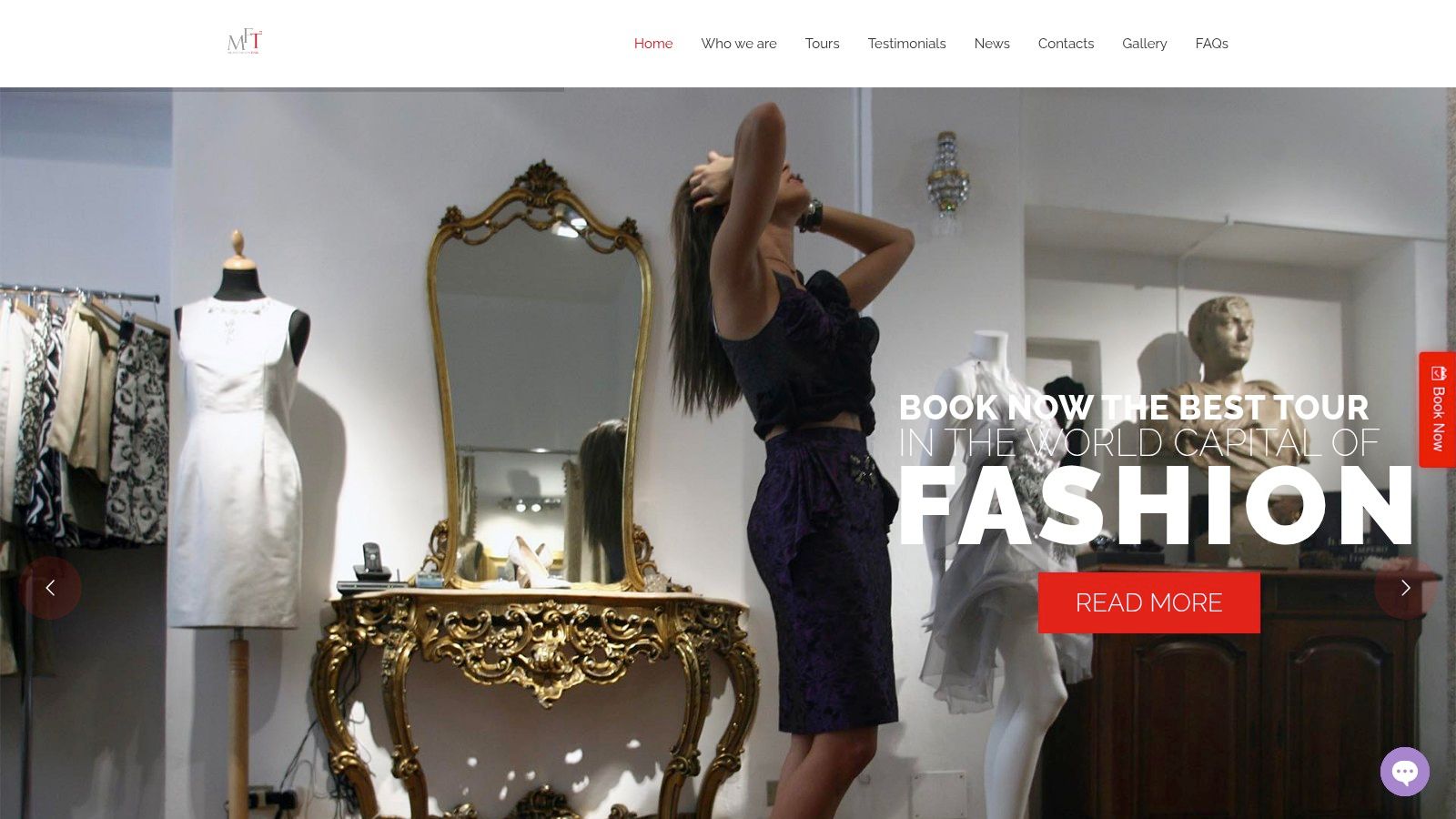
This is the only format on the list designed primarily for people coming from outside. Tours dedicated to Milanese fashion and Made in Italy, workshops, personal shopping, company visits for professional groups, initiatives linked to Fashion Week.
Discovering the scene, not running a store
For an international group or a class it is a useful introduction: supply chain, neighbourhoods, brands, industry vocabulary. For the owner of a chain it is something else. You need to understand whether the tour produces a reading of retail or just a good story about the city, and you should ask for references on the content of the company visits.
The audience you meet is increasingly hybrid. In 2025 clothing, including second-hand clothes, shoes and accessories, reached an online purchase value of €6.2 billion in Italy, up 5% on 2024, with an average receipt of €114 (Il Sole 24 Ore). People who walk into a Milan store have often already seen the product on a screen. A tour that only shows the shop window tells half the journey.
Suited to: visiting groups, students, companies looking for an introduction to Made in Italy.
Less suited to: those looking for metrics, benchmarks and actions for their own store.
To confirm: itineraries, prices and access to activities reserved for professionals.
The approach is also geared to tourism and shopping, and that is not a flaw: it is a different format. Just don't expect a structured analysis of the stores. Programmes at Milano Fashion Tour.
Formats compared
| Service | Format | Commitment | Best suited to |
|---|---|---|---|
| Milano Retail Tour (MiRT) | Guided store visits with workshop or debriefing | Half day or full day | Retail teams interested in practical benchmarking |
| Retail Institute Italy – Retail Tour | Themed tours with guided observation and discussion | Variable, depending on the scheduled tour | Professionals interested in new concepts and retail design |
| Fashion Retail Academy – FederModa Milano | Structured courses on retail and fashion skills | Variable, depending on the course | Store staff and teams in the fashion sector |
| Milano Fashion Institute – Executive course in fashion, retail and operations management | Executive course in person or via live streaming | 66 hours over six weekends | Professionals looking for in-depth training |
| IED Milano – Continuing education course in visual merchandising | Course with practical modules and workshops | Variable, to be checked with IED | People working in visual merchandising and display |
| Personal Shopping Milano – Business services | Training, workshops, in-store events and image consulting | Variable, to be agreed | Brands interested in customer experiences and in-store initiatives |
| Milano Fashion Tour | Fashion-related tours, workshops and company visits | Variable, depending on the agreed programme | International groups, students and companies interested in Milanese fashion |
Three questions before choosing a format
The choice of format depends on the kind of gap to be closed. Some problems can only be recognised in front of the shelf; others need repeated practice. Before booking, it is worth answering three questions.
What does the team need to see? If the problem is the eye, meaning staff don't recognise a high-spending customer or don't know what happens in the store next door, you need a format that takes people inside stores. A manager has to learn to read the welcome, the route and customer behaviour. A marketing team has to see how the brand is presented and translated into the shopping experience. The classroom works on a different level.
What do they need to be able to do? If the problem is the hand, meaning selling, handling objections, presenting the product, then the money should go on skills and repeated practice. A tour broadens the repertoire. Practice builds the selling reflex.
What has to change on Monday? The answer must be set before you leave. You need a metric linked to an observable behaviour: items sold, average receipt, returns, waiting time at the fitting room. Without this constraint, even a good programme remains just a successful visit.
The third point needs to be handled firmly. In September 2025 Italian retail sales rose by 0.5% in value compared with the same month of 2024 and fell by 1.4% in volume, according to Istat retail trade data. Turnover and quantities sold don't measure the same thing. Before choosing, ask the provider which indicator they will use to assess the effect of the programme.
The right format answers the three questions in one sentence. The length of the programme matters less than its ability to produce a change you can check. To understand which trends are changing the store, the MiRT Radar 2027 guide presents the 10 trends that will change the store in 2027, with the first move for each one.
Sources: Politecnico di Milano, study on the omnichannel evolution of Italian retailers (re.public.polimi.it); Politecnico di Milano, applied case on an Italian clothing retailer on Click and Collect and BORS (politesi.polimi.it); Il Sole 24 Ore, analysis of fashion retail and B2C e-commerce in Italy; Federazione Moda Italia, Fashion Report 2025 (January 2025); Federazione Moda Italia-Confcommercio, Strategic plan for fashion retail (December 2025); Istat, Retail trade, September 2025 (November 2025); Global Blue, Tax free shopping Milan Fashion Week 2025.