

 Italiano
 English
Published ·
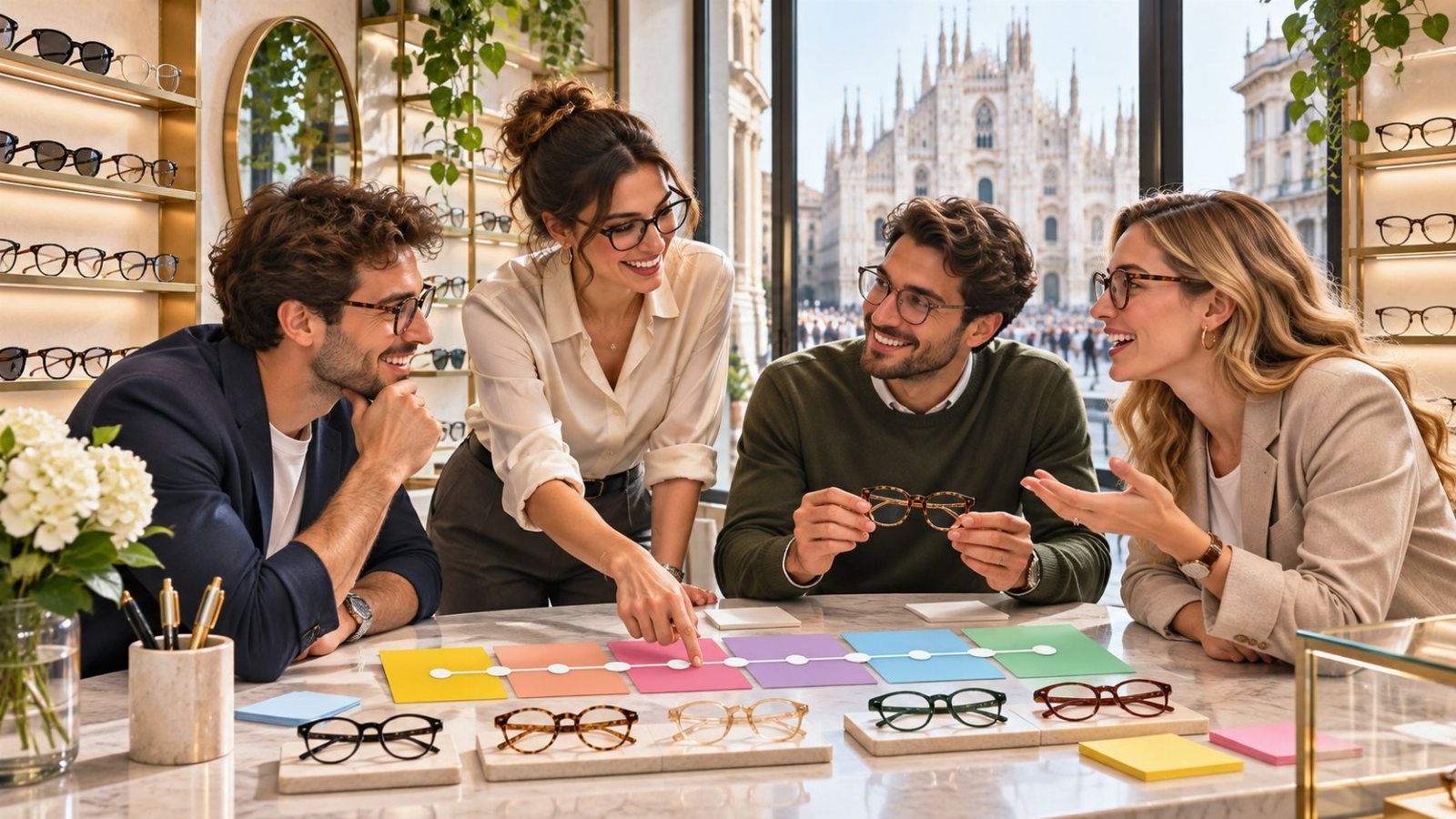
The manager of an optician's has to organise the team day, but first has to cover the shifts and work out what justifies the time away from the counter. When choosing corporate team building in Milan, the question is not which activity people will enjoy most: it is what will remain the following Monday. A skill, a different way of working together, or a shared memory. These are different outcomes, to be compared without crediting the game with automatic effects on work.
Contents
- 1. Milano Retail Tour for corporate team building in Milan
- 2. TeamBuilding.it
- 3. TeamCooking Milan
- 4. Oasi Ca' Granda
- 5. Gruppo Ethos Eventi&Incentive
- 6. Verve Lab
- 7. Mystery City Games
- Team building formats in Milan compared
- Choosing the format according to your goal
1. Milano Retail Tour for corporate team building in Milan
Milano Retail Tour (MiRT) is an observatory that has been studying stores in the field since 2012. The method is observe, interpret, apply: small groups accompanied by a researcher analyse welcome, range and selling, then work through their notes in a workshop.
In the team building format, the teams explore the city, compare views over lunch and share what they have observed. The reference point may be fashion retail in Milan, but the question has to be about your own store: what makes an offer easy to understand? How is the customer's choice supported?
- What remains: shared evidence and ideas to discuss, not just individual impressions.
- Who it works for: store managers, marketing and management who need to align on the customer experience.
- Limits: moving around on foot and being in Milan; prices not published, quote based on the project.
The route through the stores calls for attention and note-taking. It is not a free stroll past the shop windows.
2. TeamBuilding.it
With TeamBuilding.it you choose between urban games, creative activities, charity Bike Building and workshops such as AI TeamBuilders. The variety helps when you need to involve different functions or fit the activity into a company meeting.
What can remain is practical collaboration, as long as coordination is built into the design. To tell experience apart from learning, a useful reference is these research-based learning examples: doing something together is not yet the same as reflecting on it.
To clarify in the quote: facilitation, whether the venue is included or not, and an indoor alternative.
The price is not published. For a small group, consider whether the organisational support solves a real problem or adds complexity.
3. TeamCooking Milan
Preparing a dish forces people to share out tasks, follow sequences and handle the unexpected. TeamCooking Milan offers formats such as Classic Cooking and Cooking Challenge, with the option of combining a meeting and cooking at the same venue.
What remains is a concrete experience of coordination, as well as the shared meal. The competitive challenge suits teams willing to put themselves on the line; less so those looking for a specialist discussion on selling and service.
- Logistical advantage: the meeting and the activity can take place without any transfers in between.
- Checks needed: capacity, menu, allergies, dietary requirements and whether everyone can actually take part.
- Cost: price not published, to be defined on the programme.
To carry something back to the store, close with a discussion of how the tasks were assigned.
4. Oasi Ca' Granda
With Oasi Ca' Granda, the result can also stay in the place itself: looking after green spaces, farming activities and work for biodiversity. The Green Action Day shifts the focus from competition to a shared contribution.
It is a consistent choice for teams that prefer working together on a tangible task. Calling a day volunteering is not enough to prove its impact, though: you need to know which work will be carried out and how it will be documented.
The environmental result and the organisational result should be assessed separately.
Transport, clothing, physical condition and season all affect participation. Prices and capacity are not published on the page cited; the alternative in case of bad weather also needs to be agreed.
5. Gruppo Ethos Eventi&Incentive
The offer from Gruppo Ethos Eventi&Incentive combines catering and outdoor activities. In the Treasure hunt & cooking format, the hunt for ingredients comes before the work in the kitchen: the group has to connect exploration, decisions and preparation.
What remains is above all practical collaboration, with a convivial element. It works for those who want to alternate movement and hands-on work, without spending the whole day in a single workshop.
- Point to design: the link between the activity and team behaviours.
- Logistical limit: venue, transfers and the bad-weather alternative depend on the programme.
- Price: price list not published.
Whether a coach is present should be clarified within the scope of the engagement, together with the final debrief.
6. Verve Lab
Not every group needs to compete. Verve Lab, in Sesto San Giovanni, offers Mixology & Leadership, Food Experience, creative workshops and Silent Book Party.
Here the shared memory can be the main outcome. It suits teams looking for a cultural or sensory setting different from the company dinner, without having to turn every gesture into a test of leadership.
Practical criterion: if you want to work on behaviours, define the tutor's role before choosing the workshop.
The dedicated venue makes set-up easier, but means travelling for those who work elsewhere. Prices not published; capacity, accessibility, materials and extra services need to be checked for the chosen programme.
7. Mystery City Games
Maps, objects and physical clues guide the teams of Mystery City Games through central Milan, without building the game around an app. The format combines urban exploration, puzzles and competition.
What remains is a shared memory, with chances to observe how the group shares out information and decisions. Mystery shopping, by contrast, has a different purpose: observing the service, not solving a story.
- Suited to: teams looking for movement and autonomy.
- Limits: route on foot, accessibility and weather conditions.
- Cost: the website publishes a rate; check the total for your number of participants and the hosting.
Without additional reflection afterwards, don't credit the puzzles with an in-depth learning outcome.
Team building formats in Milan compared
The useful criterion is not the activity itself, but what the team is left with the next day: a skill observed in the field, practical collaboration or a shared memory. The table ranks the seven formats on this basis, with duration, size and price constraints.
| Format | Type of activity | Duration or group size | Price | Ideal for |
|---|---|---|---|---|
| Milano Retail Tour | Guided store visits and workshops | Half or full day; small groups, tailor-made private events | Custom quote | Learning from observing stores and applying ideas to your own brand |
| TeamBuilding.it | Urban games, workshops, outdoor and creative activities | Groups from 10 to over 1,000 participants | Custom quote | Teams of different sizes looking for flexible activities |
| TeamCooking Milan | Cooking classes, culinary challenges and show cooking | 3–4 hours | Price on request | Groups that want to combine collaboration and conviviality |
| Oasi Ca' Granda | Outdoor activities, volunteering and environmental projects | Duration and capacity to be agreed | Price on request | Teams interested in working together and contributing to local biodiversity |
| Gruppo Ethos Eventi&Incentive | Culinary activities, treasure hunts, outdoor and wellness | Duration and group size to be agreed | Price on request | Teams that prefer to learn through shared experiences |
| Verve Lab | Cultural, sensory and creative workshops | Minimum 3 hours; capacity to be checked | Price on request | Groups looking for a creative and convivial experience |
| Mystery City Games | Urban treasure hunt with puzzles and local history | About 2 hours; route of about 3 km | Rate published on the format's website, to be confirmed for number of participants and hosting | Teams that want a dynamic outdoor game |
The entries “to be agreed” and “on request” matter as much as the price: they show that venue, shifts, meals and hosting can move the quote more than the format itself.
Choosing the format according to your goal
Satisfaction measures how much people enjoyed the day; it leaves open what will remain in the store the following Monday. In 2018, 45.5% of Lombard companies with at least ten employees provided non-mandatory training (Istat, Lombardy report): a figure that measures how widespread training is and leaves the results out.
Before comparing the seven formats, the useful question is what the team is left with when the activity ends. A store tour with a closing workshop leaves a skill observed in the field and ideas that apply to your own brand; cooking, treasure hunts and outdoor activities leave mainly practical collaboration and a shared memory, effective for breaking the ice and weaker if the goal is to change a sales practice.
- Define what needs to remain: an observed skill, collaboration or a memory.
- Compare the full cost: activity, venue, transport, meals and time away from the store.
- Check accessibility: mobility, dietary needs and the shifts of those who work in the store.
- Assign a follow-up: one behaviour to try and one person responsible for checking it is applied.
To prepare your choice and bring it back to day-to-day work, read the guide with five ideas from Milan's flagships to copy on a small scale.
Sources: Istat, Censimento permanente delle imprese, rapporto regionale Lombardia (Permanent census of enterprises, Lombardy regional report), March 2021; format pages of the respective organisers.