

 Italiano
 English
Published ·

The mystery shopping report arrived by email on a Tuesday morning: three stores, eight items, a score next to each one. The owner reads the lowest line, checks who was on shift that morning and thinks about who to call in. From that moment the programme stops being research and becomes a staff management problem.
Mystery shopping is for something else. It measures whether a process works and the conditions the people in the store are working in, not whether a person is good at their job. The difference between the two uses decides whether the data can be used, and it has practical consequences on the legal side too.
Contents
- What is mystery shopping
- The aspects of the in-store experience that are assessed
- How a visit works, from preparation to report
- How to read the results without misinterpreting them
- What to tell staff and what not to measure
- What to do on Monday morning with a mystery shopping programme
What is mystery shopping
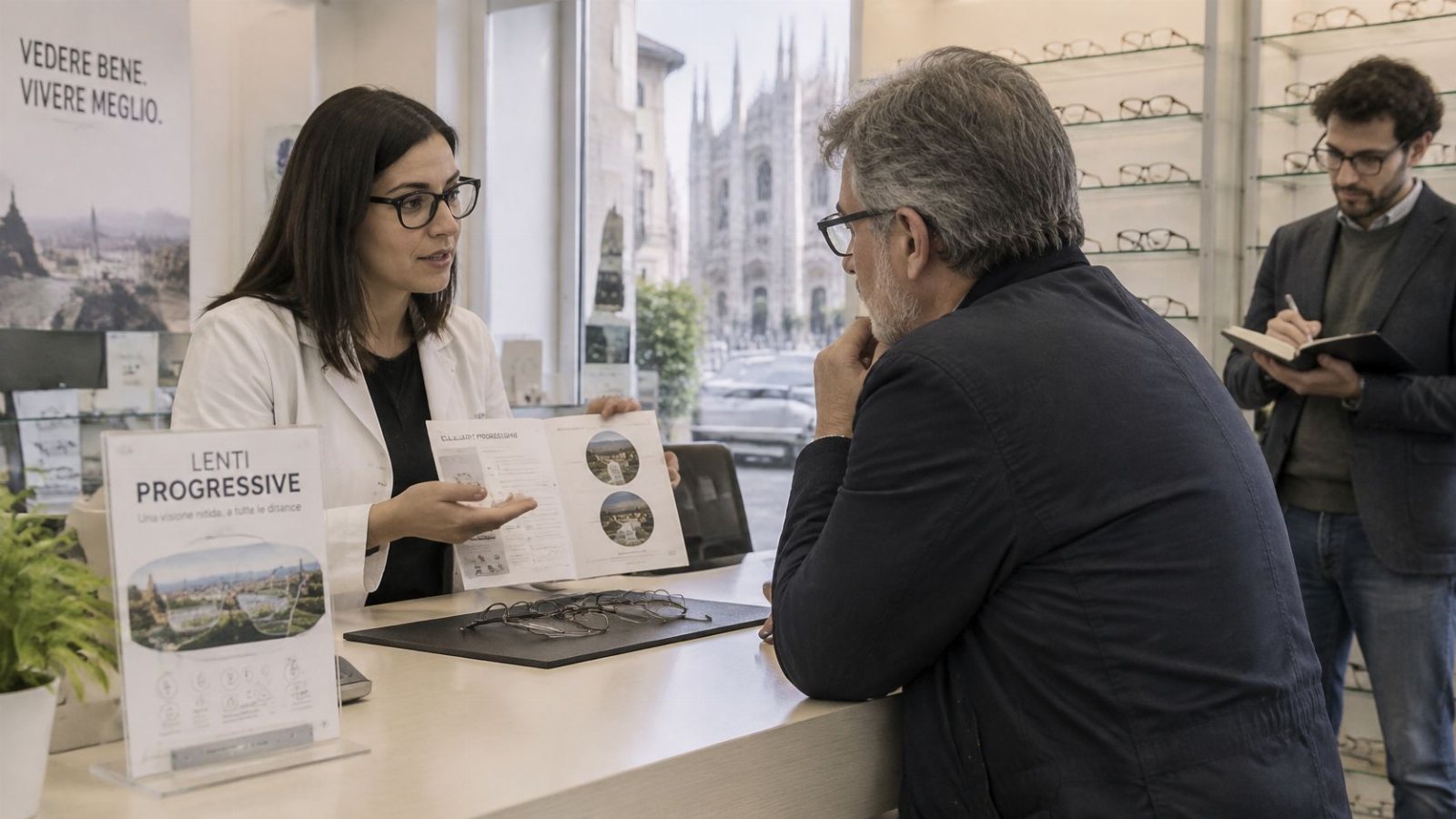
Picture a neighbourhood optician. A customer walks in and asks for progressive lenses; the staff serve them in a few minutes. Next to them, a customer of similar age making a similar request notes on a grid the time before being greeted, the questions asked, the explanation of the differences between two models. That is the whole method: trained assessors simulate a normal purchase process and record the experience against predefined criteria, instead of relying on takings or general opinions (Mystery Client).
What sets it apart from an occasional check is repeatability. The same journey, from the entrance to payment, is observed under the same rules in every store: welcome, staff approach, product presentation, shelf availability, queue management, the till and compliance with brand standards (Mystery Client). The result is data on the process, not a judgement on a person.
Picture a chain of three perfumeries that wants the same observation in each store, with the same timings and the same questions. The method creates value through comparability across locations and periods; outside that, it remains a well-written impression.
The aspects of the in-store experience that are assessed
A general impression can't be compared with anything. An observable indicator can. A solid protocol turns every standard into a measurable item, with an operational definition that two different assessors would apply in the same way.
| Aspect | What the assessor records | Example in the store |
|---|---|---|
| Welcome | Time taken to acknowledge the customer | Greeting and first contact within the standard's threshold |
| Needs analysis | Questions asked before suggesting a product | Staff ask what the product is for and how it will be used |
| Product knowledge | Correct answers to technical questions | Explanation of materials, use and differences between two models |
| Sales suggestion | Whether a suggestion or an alternative is offered | A matching add-on suggested naturally |
| Availability | Stock present on the shelf | Item in stock or orderable with clear lead times |
| Promotions | Correct application of the promotional price | Price at the till matches the price displayed |
| Queues and till | Waiting time and payment handling | Number of people in the queue and checkout time |
| Brand standards | Compliance with presentation guidelines | Display, cleanliness and tidiness of the sales area |
Two things stay outside the score. The first is the gap between compliance and perceived quality: the grid says whether the standard was applied, the free comments say how the visit felt. The second is how they are recorded: quantitative scales and comments must be kept separate, and it is this separation that reduces variability between observers.
If you need the full map of touchpoints, our outline of the customer journey in retail is the place to start.
How a visit works, from preparation to report
Picture a chain of three perfumeries in Lombardy that wants to understand why the welcome works in one store and not in the other two. The sequence below is designed to answer that without ambiguity.
The process, from the first brief to the final report.
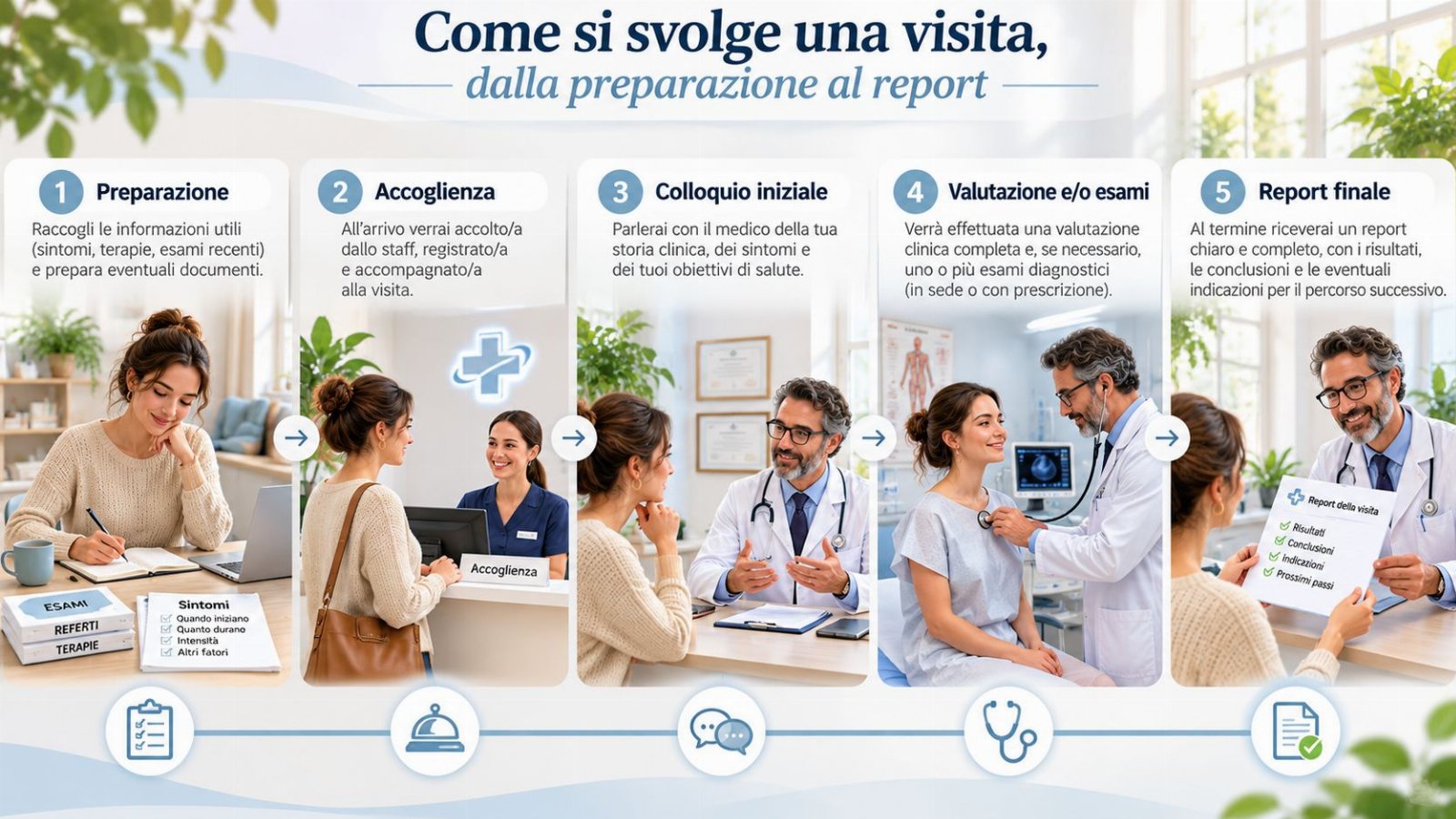
- Define the objective and the standards. Welcome, advice, till: without written standards there is no comparison, only impressions.
- Build the scenario. The simulated customer's profile and request are identical in every store.
- Write the questionnaire. Scales kept separate from comments and the same operational definitions for every item: this is how you reduce differences in interpretation between assessors, as this guide to mystery shopping in Italy explains.
- Run a pilot in two or three stores, to check that the questions and scoring criteria produce consistent data before extending the programme.
- Hand the visits to trained, independent observers, with timings measured under a single rule and conflicts of interest declared.
- Compile the report by store and period. Never by staff member.
- Compare and discuss. Set the results against similar stores and take them to the team.
The same sequence, repeated, makes the data comparable across cities and periods. It is the only reason to pay for a visit instead of looking at the takings.
How to read the results without misinterpreting them
A single national average is misleading. The same questionnaire and the same threshold applied to every store produce comparable numbers and weak interpretations. The useful comparison is between a store in central Milan and a store in a small town in the South: expectations change on speed of service, personal space, opening hours, the lunch break and seasonality (Mystery Client).
The same source points to a second limit: in Italy the correlation between operational compliance scores and customer satisfaction, measured with Voice of Customer programmes, turns out to be weaker than reported in some Northern European markets.
Operational rule: stratify by geographical area, store format and urban context, and pair the observational score with reviews and interviews.
For Milan this means separating at least the centre from the neighbourhoods before turning the numbers into training objectives. And remembering what the score tells you: whether the standard was applied, not everything the customer thinks. To read the rest you need structured listening, like the kind we describe in our approach to the Voice of Client.
What to tell staff and what not to measure
The question store managers ask is always the same: can I use this report with an individual? In Italy a visit can generate data on an employee's behaviour. If that data is used for purposes linked to the employment relationship, Article 4 of the Statuto dei lavoratori (Italy's Workers' Statute) comes into play, along with the GDPR principles of lawfulness, fairness, transparency and proportionality (Cybersecurity360).
Removing the name is not enough. Store, shift, role and a description of the interaction can still make the employee identifiable, and in a chain of 3 to 15 stores a single observation carries a lot of weight in HR decisions.
The most solid project measures processes and operating conditions (welcome, product availability, timings, clarity of information), aggregates by store and period and avoids punitive rankings. The ICC/ESOMAR International Code requires staff to be informed in advance: the period, the objectives, the general nature of the study, whether the people observed may be identifiable, and any use of recordings, with their purpose, recipients and retention periods; if the pay system includes commission or bonuses, it must be made clear whether losses caused by the interaction will be compensated (ICC/ESOMAR code).
Before launch you need to set the purpose, the legal basis, who can access the reports, retention periods and the rules for challenging a result. An alternative to the ranking is to show the team how other stores work: the Retail Tour is a guided visit to Milan's most innovative stores, in small groups with a MiRT researcher, followed by a workshop where what you observed becomes ideas for your own brand.
What to do on Monday morning with a mystery shopping programme
- Choose three or four processes. Welcome, advice, till and availability are the starting point; nobody reads a forty-item questionnaire.
- Inform staff before the first visit. Take the list from the previous section and turn it into a written communication.
- Read the results by store and period. No line should attribute a score to a staff member.
- Separate the centre from the neighbourhoods. Stratification is done before setting objectives, not after.
- Start a pilot in two stores. Extend the programme only when the data is consistent.
The Research Based Learning method, which underpins our programmes, starts exactly here: observe first, decide later (how it works in the field).
A programme that measures processes and conditions, not people, is the only one that leads to an operational decision the following Monday.
If you want a grid to start from, download the free guide.
Sources: Mystery Client, What is mystery shopping; Mystery Client, Mystery shopping in Italy, a guide for international retailers; Mystery Client, Italian retail market, what international brands get wrong; Cybersecurity360, Mystery shopping in the workplace, between supervision and workers' privacy; ICC/ESOMAR, ICC/ESOMAR International Code on Market, Opinion and Social Research.